





เราได้ (หรือไม่ได้) หมุนเวียนแค่ไหน?
คำถามนี้มักถูกถามจากผู้กำกับดูแลนโยบาย ผู้ประกอบการ นักอุตสาหกรรม และนักวิชาการ
ทำให้เกิดวิธีวัดความสำเร็จของเศรษฐกิจหมุนเวียนที่หลากหลาย และใช้ร่วมกันได้
ซึ่งเป็นเรื่องดีที่เราจะใช้แนวทางที่หลากหลายในการทำความเข้าใจประเด็นที่ซับซ้อนเช่นนี้
และนี่เป็นอีกทางเลือกหนึ่ง
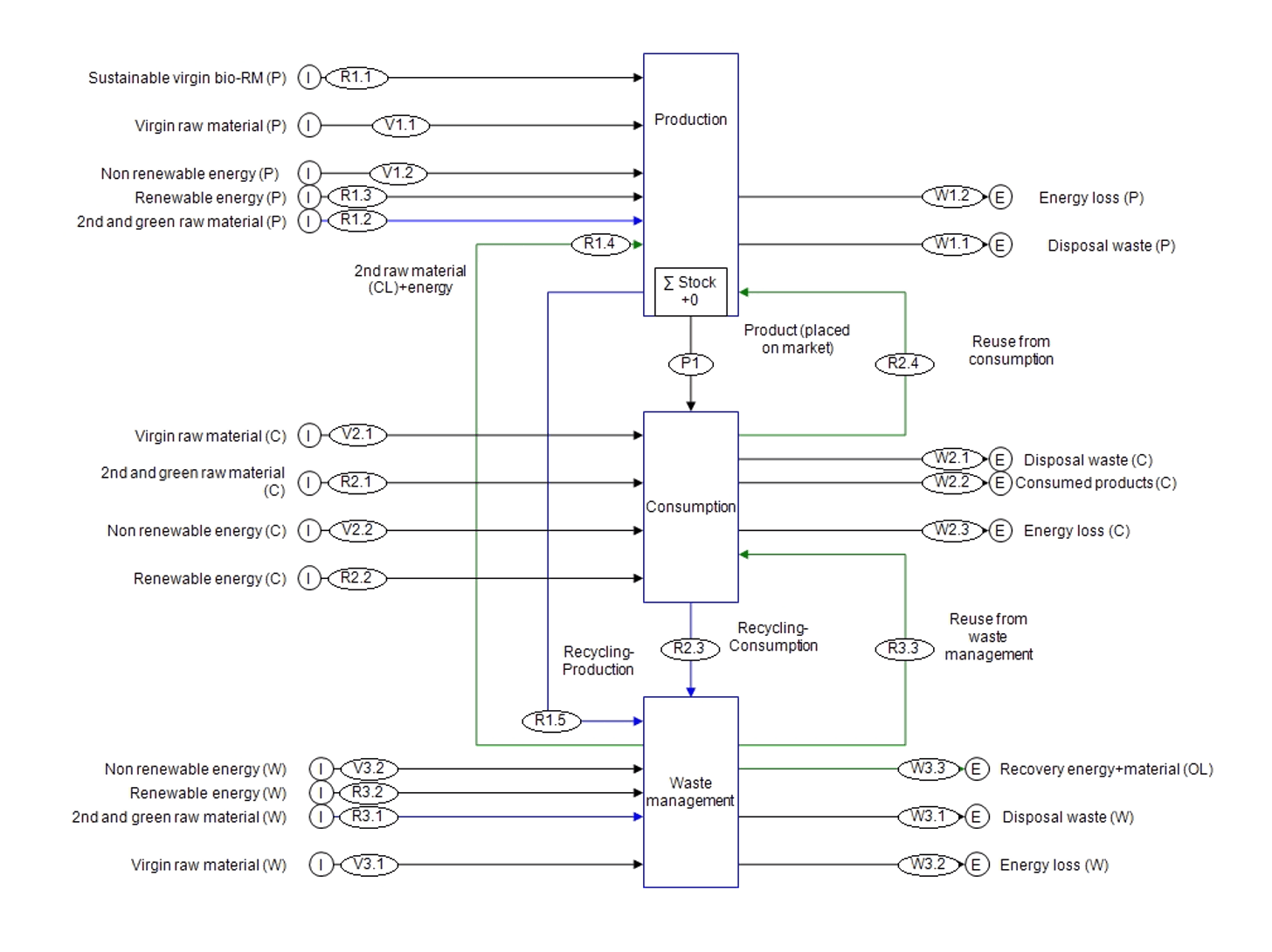
แนวคิดของเราเริ่มจากการวาดภาพจำลองขอบเขตที่เราต้องการประเมินโดยใช้โมเดล การผลิต-การบริโภค-การจัดการของเสีย (Production-Consumption-Waste management model (PCW) model) และเติมข้อมูลการไหลของวัสดุลงในโมเดลที่ได้ให้สมดุล ซึ่งเราได้ใช้ Software for Substance Flow Analysis (STAN) ที่พัฒนาโดย Technology University of Vienna ช่วยในการคำนวณการไหลของวัสดุในโมเดลที่ซับซ้อนให้สะดวกรวดเร็ว และเมื่อเราได้โมเดลที่เหมาะสมเรียบร้อยแล้ว เราสามารถนำค่าที่ได้จากโมเดลมาคำนวณตัวชี้วัดเศรษฐกิจหมุนเวียนในขั้นต่อไป
อาศัยแนวคิดจาก Circularity Indicator Project ร่วมกับแหล่งข้อมูลอื่นๆ เกี่ยวกับเศรษฐกิจหมุนเวียน เราได้สร้างเครื่องมือคำนวณที่ใช้ค่าต่างๆ จากโมเดลที่สมดุลแล้ว มาคำนวณตัวชี้วัดตามหลักการพื้นฐานดังกล่าว
เครื่องมือคำนวณนี้ยังสามารถรวมโมเดลหลายโมเดลเข้าด้วยกันเพื่อสนับสนุนให้เกิดการทำงานร่วมกัน และคำนวณตัวชี้วัดรวม ไม่ว่าจะเป็นระหว่างแผนกในองค์กรขนาดใหญ่ หรือความร่วมมือระหว่างองค์กร
คณะวิจัยขอขอบคุณหน่วยบริหารและจัดการทุนด้านการเพิ่มความสามารถในการแข่งขันของประเทศ (บพข.) และเจ้าหน้าที่ทุกท่านในการสนับสนุนงบประมาณ และคำแนะนำต่างๆ ที่มีต่อคณะวิจัย
How circular are we (or are we not)?
This is often asked by policy makers, entrepreneurs, industrialists and academia.
Well, there are several ways to measure success in a circular economy and they complement each other. It is generally wise to measure such complex issues from different views so that it is better understood. And this is one option.
Our approach is starting from drawing entities we want to assess using the Production-Consumption-Waste management (PCW) model to define boundary of our assessment. Material flow data is then filled and balanced. Thanks to Technology University of Vienna who has developed Software for Substance Flow Analysis (STAN) which makes the calculation of complicated material flow a breeze. Once the PCW model is in-place, it is ready to move to circularity index calculation.
According to the concept based on the Circularity Indicator Project together with other inspiring sources on circular economy, the calculator then uses flow values from the PCW model to calculate the index of the entity adopting such a principle.
The calculator also equips with the ability to combine two or more PCW models together in order to foster the integration of several departments of a large organization, or the collaboration among organizations to represent overall circularity index.
Research team would like to express thanks to the Program Management Unit for Competitiveness (PMUC) and their staff for fundings and supports given to the team.
Research team:
Center of Excellence on Hazardous Substance Management:
- Mr. Surachai Leewattananukul
- Ms. Kannika Khwamsawat
- Mr. Natnapon Sripramote
- Mr. Supanon Tanghirunchai
Mae Fah Luang Foundation under Royal Patronage:
- Dr. Thanapong Duangmanee
- Ms. Sunaree Namyuak
- Ms. Jarinee Singja
Faculty of Science, Silpakorn University:
- Dr. Siriporn Bor-rirukwisitsak
Software developer:
- Mr. Veerawat Hanamornroongruang
- Ms. Tidaratt Anutaraponchai